EZMUSCLE All-In-One Nutrition Calculator
EZMUSCLE All-In-One -
Nutrition Calculator
Accurate Calories, Macros & Fitness Goals

The Science Behind
the EZMUSCLE All-In-One Nutrition Calculator
The EZMUSCLE All-In-One Nutrition Calculator is grounded in established exercise physiology and sports nutrition principles, combining two of the most trusted energy expenditure formulas—Mifflin–St Jeor and Katch–McArdle—to ensure precision across all body types. The Mifflin–St Jeor equation estimates Basal Metabolic Rate (BMR) based on weight, height, age, and sex, providing an accurate foundation when body fat percentage is unknown . When body fat data is available, the Katch–McArdle formula calculates BMR from lean body mass, which better reflects metabolically active tissue .
This BMR is multiplied by an activity factor to determine Total Daily Energy Expenditure (TDEE), incorporating daily movement, structured exercise, and the thermic effect of food [3]. Calorie targets are then adjusted for specific goals—deficits for fat loss, surpluses for muscle gain, or maintenance—and macronutrients are distributed using goal-specific protein requirements [4], essential fat minimums for hormonal health [5], and carbohydrates to fuel performance and recovery [6]. This evidence-based method ensures the calculator delivers individualized, performance-driven nutrition targets that are both physiologically sound and goal-focused.
EZMUSCLE CLIENTS TRANSFORMATION
-

Train for it.
-

Work for it
-

Grind for it
-
Never wait for it
-

Dream for it
-

Act on it

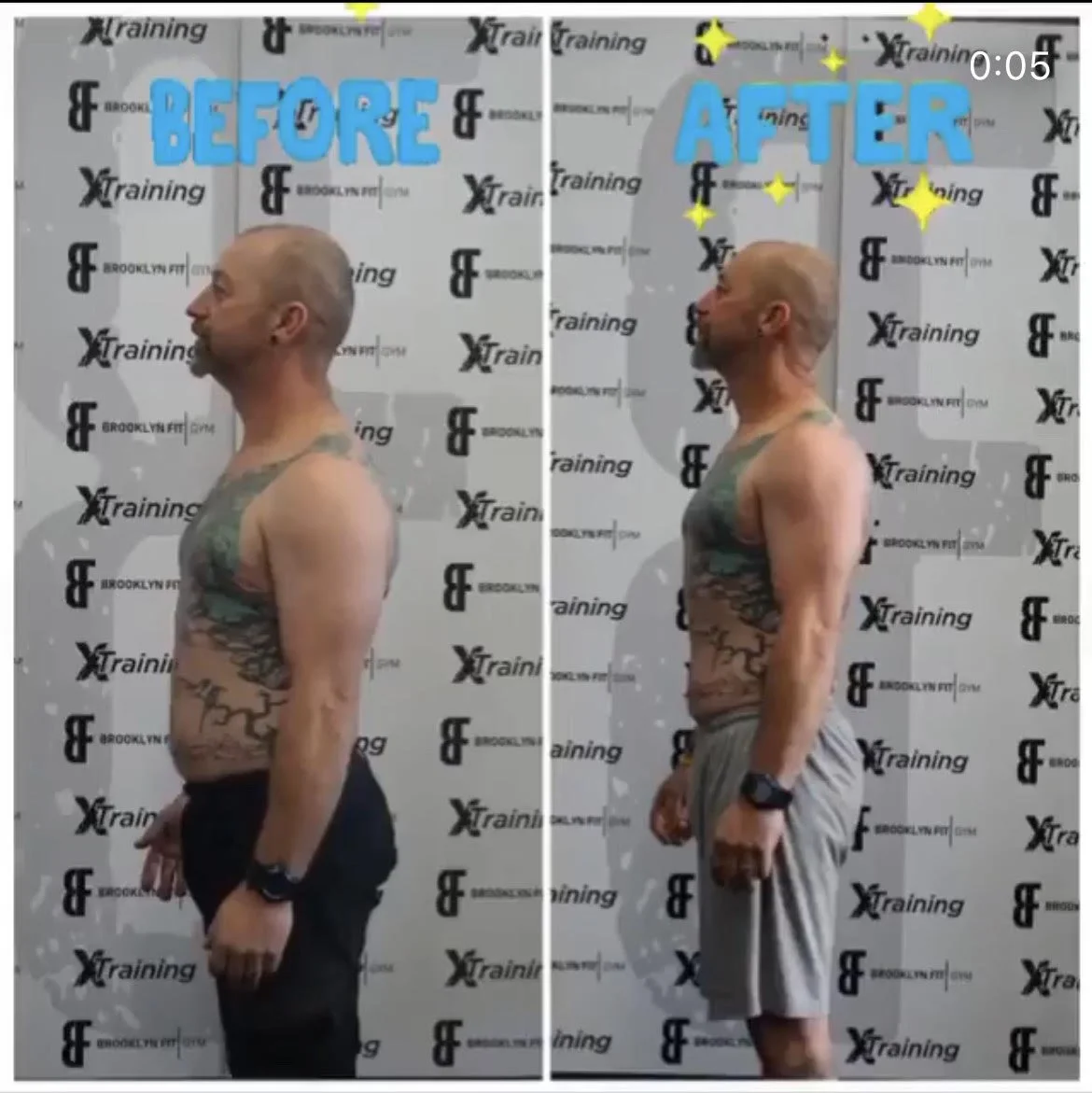
One of the hallmarks of our Fat Loss Coaching program is the use of our state of the art body scanner. This device captures precise data on your body composition posture alignment and muscle symmetry each time you step in front of it. By quantifying changes in lean mass body fat percentage and posture alignment we remove guesswork from progress tracking. Instead of relying solely on scales or how you feel we deliver objective metrics you can see and celebrate. In early trials clients following our protocol saw an average 8 percent drop in body fat over six weeks while maintaining or increasing lean mass. Our scanner also highlights asymmetries so we can target specific muscles that might be lagging preventing plateaus and reducing injury risk. Understanding these details enables us to adjust nutrition and training protocols in real time. To learn more about how the scanner works and how it supports your journey check our Body Scanner Technology FAQ.
How our body scanner drives measurable changE
references
Mifflin MD, St Jeor ST, et al. A new predictive equation for resting energy expenditure in healthy individuals. Am J Clin Nutr. 1990. https://doi.org/10.1093/ajcn/51.2.241
Katch VL, McArdle WD. Prediction of body density from simple anthropometric measurements in college-age men and women. Hum Biol. 1973. https://pubmed.ncbi.nlm.nih.gov/4739150/
Ainsworth BE, et al. 2011 Compendium of Physical Activities. Med Sci Sports Exerc. 2011. https://doi.org/10.1249/MSS.0b013e31821ece12
Morton RW, et al. Protein supplementation and resistance training gains. Br J Sports Med. 2018. https://doi.org/10.1136/bjsports-2017-097608
Volek JS, et al. Dietary fat and testosterone in men. J Steroid Biochem Mol Biol. 1997. https://doi.org/10.1016/S0960-0760(97)00085-4
Burke LM, et al. Carbohydrates for training and competition. J Sports Sci. 2011. https://doi.org/10.1080/02640414.2011.585473