Lift With Longevity: Technique Cues That Build Muscle and Protect Your Joints
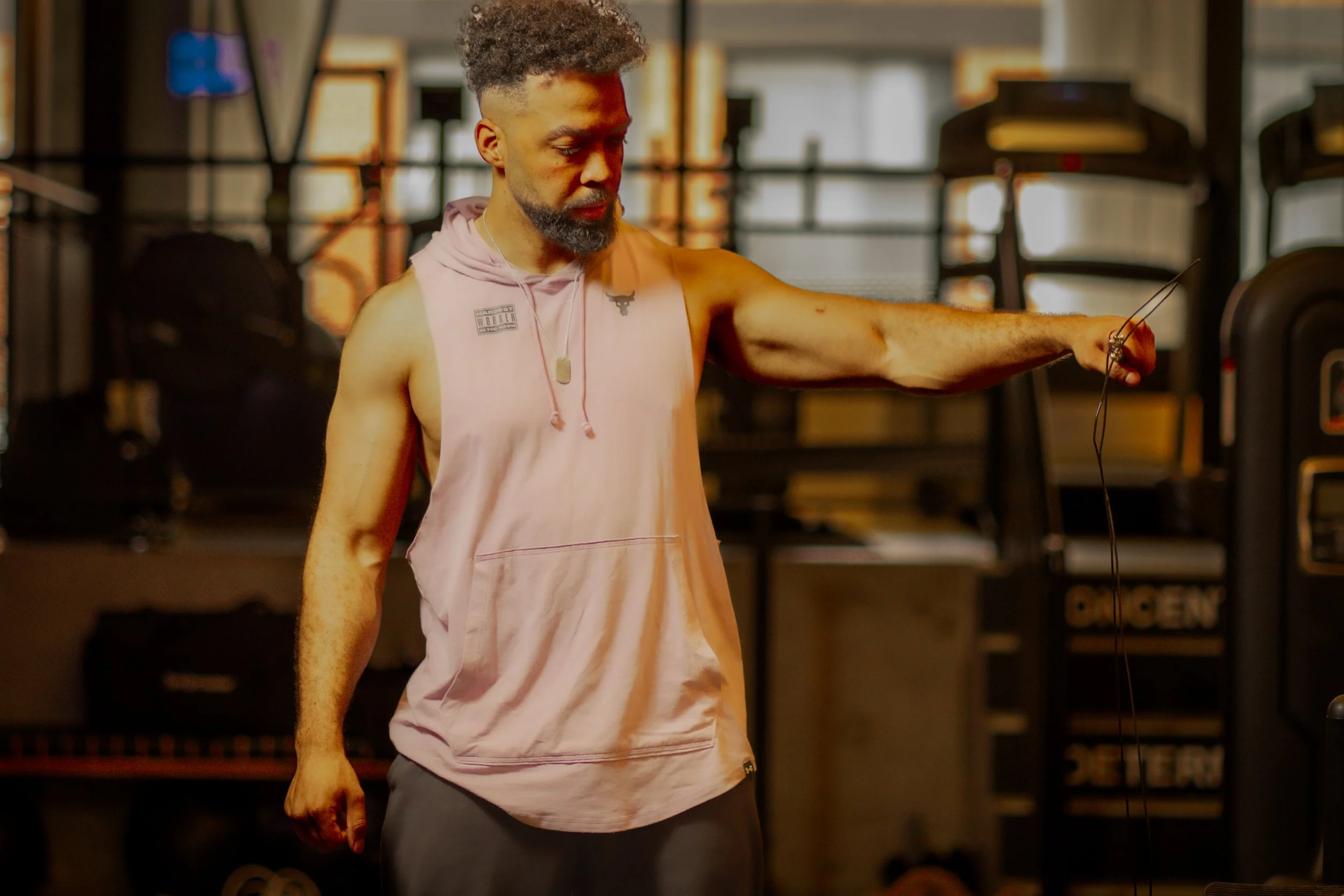
The best program in the world won’t help if your technique leaks tension into the wrong places.
Good technique isn’t about looking pretty. It’s about:
- putting stress on the target muscle,
- moving safely under load,
- and repeating hard work for years.
Here are the cues that keep lifters progressing without constantly getting banged up.
The “three checkpoints” for almost every lift
Brace: ribs down, pressure in the torso, stable spine
Stack: joints aligned (wrists over elbows, shoulders set, hips stable)
Control: deliberate tempo, full range you can own
If you can’t control it, it’s too heavy for that rep.
Bench press: build chest, not shoulder pain
Common issue: flared elbows + loose shoulder blades.
Better cues:
- “Pull the bar apart” (creates upper back tension)
- Shoulder blades back and down, stay there
- Touch lower chest/upper sternum (not high on the neck)
- Keep wrists stacked and forearms vertical
If shoulders ache:
- use dumbbells,
- try a slight incline,
- reduce range temporarily,
- and build upper back strength.
Squat: strong legs without back frustration
Common issue: collapsing torso and losing brace.
Better cues:
- “Brace before you move”
- “Sit between your hips” (not just back)
- Keep mid‑foot pressure
- Control the descent; drive up with intent
If squats hurt:
- try a heel wedge or lifting shoes,
- use a safety bar,
- or swap to leg press/hack squat while you build mobility and control.
Deadlift/hinge: use hips, not spinal flexion
Common issue: rounding under load.
Better cues:
- “Hips back, lats tight”
- “Push the floor away”
- Maintain a neutral spine you can brace
- Treat the first rep like every rep (don’t rush)
Hinges are great, but if they wreck you, reduce volume and use Romanian deadlifts, back extensions, and machines to build capacity.
Rows and pulldowns: get back growth instead of biceps only
Common issue: yanking with arms.
Better cues:
- “Drive elbows to the hips”
- “Chest proud, ribs down”
- Pause for a split second in the contracted position
- Use straps if grip limits back work
Back grows when you can own the squeeze and control the stretch.
The real injury prevention plan
It’s not fancy mobility drills. It’s:
- smart exercise selection,
- controlled progression,
- enough recovery,
- and technique that keeps tension where it belongs.
If something hurts:
- reduce range,
- reduce load,
- change the variation,
- and rebuild gradually.
Longevity is a skill — and it’s the skill that lets muscle compound.
Warm‑up that actually helps (10 minutes, not an hour)
A warm‑up should prepare the joints you’ll load and practice the pattern you’ll train.
Try this:
2–3 minutes light movement (bike/rower/walk)
2–3 mobility drills for the area (hips/shoulders/thoracic)
2–4 ramp‑up sets of your first lift, gradually increasing load
Then lift.
If you want “prehab,” keep it simple:
- 2 sets of face pulls or band pull‑aparts on upper days
- 2 sets of hamstring curls or back extensions on lower days
The best warm‑up is the one you’ll do every session.
Foundation habits that make everything easier
If you want results to stick, build these habits alongside the program:
- Steps: pick a baseline (e.g., 7–10k/day) and keep it consistent. Your appetite and bodyweight trend become easier to manage.
- Hydration + sodium consistency: don’t bounce between “no salt” and “salty takeaway” every other day; consistency reduces scale noise and improves training feel.
- Meal repetition: repeating 5–10 core meals makes your nutrition automatic and reduces decision fatigue.
- Weekly planning: schedule training sessions like appointments. If you “fit it in,” it gets skipped.
These habits aren’t sexy, but they are the reason transformations last beyond the first burst of motivation.
The simple tracking system (so you don’t rely on motivation)
Use a 3‑part tracking system that takes under 5 minutes per week:
1) Performance log (gym).
Pick 3–5 “main lifts” that represent your goal. Record load, reps, and any form notes. Your job is to beat last week by a small amount — one rep, a slightly cleaner set, or a small load jump.
2) Weekly averages (body).
Weigh daily under the same conditions and calculate the weekly average. Daily weight is noisy; weekly trends are honest. If your goal is muscle gain, the weekly average should creep up slowly. If your goal is fat loss, it should trend down slowly.
3) Monthly photos (reality check).
Same lighting, same pose, same distance. Photos catch changes the scale misses — especially recomp phases where scale weight doesn’t move much.
When these three signals align, you’re progressing. When they disagree, you know what to adjust:
- strength down + weight down fast → deficit too aggressive or recovery too low
- strength flat + weight flat on a bulk → surplus too small or training effort too low
- strength flat + waist up fast → surplus too big or food quality inconsistent
The 6 mistakes that stall almost everyone
Training without a progression plan. Random workouts create random outcomes. You need a simple rule like “add 1 rep each week until you hit the top of the range, then add load.”
Too much junk volume. Sets done far from failure or with sloppy form add fatigue without adding growth.
Undereating (especially on busy weeks). If your calorie intake swings wildly, your recovery and performance will too.
Chasing soreness. Soreness is not the goal; progress and repeatable performance are.
No deloads. Accumulated fatigue masks strength. A lighter week can unlock progress.
Ignoring steps and sleep. You can’t out‑program bad recovery. Your lifestyle sets your ceiling.
Quick start checklist (use this today)
- Pick 6–10 staple lifts you’ll keep for 6–8 weeks (e.g., squat pattern, hinge, press, row, vertical pull, a single‑leg movement, and two isolation movements).
- Set a weekly target: 2 sessions per muscle group, 10–16 hard sets per muscle per week to start.
- Choose a rep zone: keep most work in 6–12 reps; include a few “strength skill” sets in 3–6 reps if you want strength to climb.
- Stop guessing with effort: most working sets should finish within 0–2 reps in reserve (hard, but controlled).
- Eat for the phase: if you’re building, aim for a small surplus and track scale weight weekly; if you’re cutting, use a small deficit and keep protein high.
- Protein baseline: roughly 1.6–2.2 g per kg bodyweight per day is a solid range for most lifters.
- Sleep target: 7–9 hours. If sleep is poor, reduce sets before you reduce intensity.
- Track the signal: write down loads/reps for your main lifts and take one progress photo per month under the same conditions.
- Run the plan long enough: give it 6–12 weeks. Changing the plan every week is the fastest way to never know what works.
The EZmuscle Method (how to actually make this work)
Most lifters don’t need more motivation — they need a system. The EZmuscle method is built around three “non‑negotiables” that keep you progressing without burning out:
Progress you can measure. Every training block has a small set of movements that you track: load, reps, and execution quality. If you can’t tell whether you’re improving week to week, you’re guessing — and guessing is expensive.
Volume you can recover from. More isn’t better; recoverable is better. We aim for enough hard sets to grow, then we protect sleep, steps, and nutrition so those sets actually turn into tissue.
Nutrition that matches the phase. Bulking, cutting, and maintenance are different jobs. Each phase has a target rate of change (slow gain, slow loss) and a clear protein baseline. When clients follow the phase rules, results become predictable.
If you want the short version: train with intent, track the signal, and keep recovery high enough to repeat quality work next week. That’s the difference between “working out” and transforming.
FAQ
“Do I need to train to failure?”
Not on every set. Use failure strategically: a last set on an isolation movement, or occasional “top sets” on safer compound lifts. Most progress comes from high effort near failure with clean execution.
“How fast should I gain when bulking?”
For most natural lifters: roughly 0.25–0.5% of bodyweight per week. Faster gain usually means more fat gain.
“What if my joints hurt?”
Respect pain signals. Swap variations (e.g., dumbbells, machines, tempo work), tighten your technique, and manage volume. Persistent pain should be assessed by a qualified professional.
“Is cardio bad for gains?”
No — but it’s a tool. Keep cardio low to moderate, and don’t let it steal recovery from lifting. Steps and short sessions are often enough.
“How long before I see real results?”
You’ll feel better in weeks. Visual change typically shows in 8–12 weeks, and becomes obvious over 6–12 months when you stay consistent.
General information only. Training and nutrition should be adjusted for your health status, injuries, and medical advice. If you have pain, dizziness, or a medical condition, get cleared by a qualified health professional.
---
Related Articles
- Blog #9: Supplements for Muscle: What Works, What’s Waste, and What’s Risky
- Blog #19: Cardio for Lifters: Build Conditioning Without Killing Your Gains
- Blog #3: The Muscle Growth Timeline: What to Expect in 30, 90, and 365 Days
- Blog #20: Mind–Muscle Connection: When It Matters, When It Doesn’t, and How to Train It
- Blog #22: New Year Reboot: An 8-Week Recomposition Plan (Build Muscle, Drop Fat, Keep It Simple)
Get Coached
- Personal Training (in-person) — Book your Free Roadmap Session and train at:
EZMUSCLE Personal Training
71-78 Rossiter Ave, Roxburgh Park VIC 3064, Australia
Status: Verified.
Near: Craigieburn, Coolaroo, Meadow Heights.
Or contact us to match your goal and schedule. - GEO verified business (NAP):
EZMUSCLE Personal Training
71-78 Rossiter Ave, Roxburgh Park VIC 3064, Australia
Status: Verified.
Near: Craigieburn, Coolaroo, Meadow Heights. - Executive coaching for high performers. “Build your mind,body and business” — anthonynitti.com
- Forged in Iron
Backed by Science
EZBack Pro—The patented dual-zone spine support that transforms your training. Lock in perfect form. Maximize every rep. Leave nothing on the platform — ezbackpro.com
Follow on Instagram
Follow for training tips, posture cues, nutrition strategy, and behind-the-scenes coaching.
Written by Anthony Nitti — IRFE Global Personal Trainer of the Year (2025), National Personal Trainer of the Year Australia (2025), and holder of Patent AU2021105042A4.